
Vestal City Directory Collections at BCPL
The Broome County Local History & Genealogy Center is the primary local starting point for Vestal historical directory work. On the second floor of Broome County Public Library, it combines public-library, Broome County Historical Society, county-historian, and City of Binghamton historian holdings. Its collection includes photographs, printed histories, maps, vertical files, obituaries and indexes, genealogical resources, and two researcher internet computers. The public web page does not publish a shelf-by-shelf Vestal city-directory bibliography, so the collection table distinguishes documented holdings from directory runs that staff must identify.
| Collection or source | Years or scope | Where held | Access |
|---|---|---|---|
| Broome census microfilm | 1810–1930 listed, including New York state census years | BCPL Local History & Genealogy Center | On-site local-history collection; verify the needed roll and page. |
| Obituary files and microfilm | File search; microfilm needed for pre-1960 or not-filed requests | BCPL | Written request; documented fee rules apply. |
| Local newspaper microfilm | Named Binghamton/Broome title runs, including examples from 1846–1964 | BCPL | On-site research or defined request service. |
| 1876 Atlas | 97 pages | Broome GIS Map Library | Digitized map-library listing. |
| 1908 Plat Book | 95 pages | Broome GIS Map Library | Digitized map-library listing. |
| Town of Vestal tax sheets | 18 sheets | Broome GIS Map Library | Public PDF and map route. |
| City or reverse directories | Exact years and publishers unverified | Ask BCPL Local History Center | Request a bibliography, call numbers, format, and street-section status. |
BCPL’s Local History & Genealogy Center is the documented source for the combined collection and its request channels.
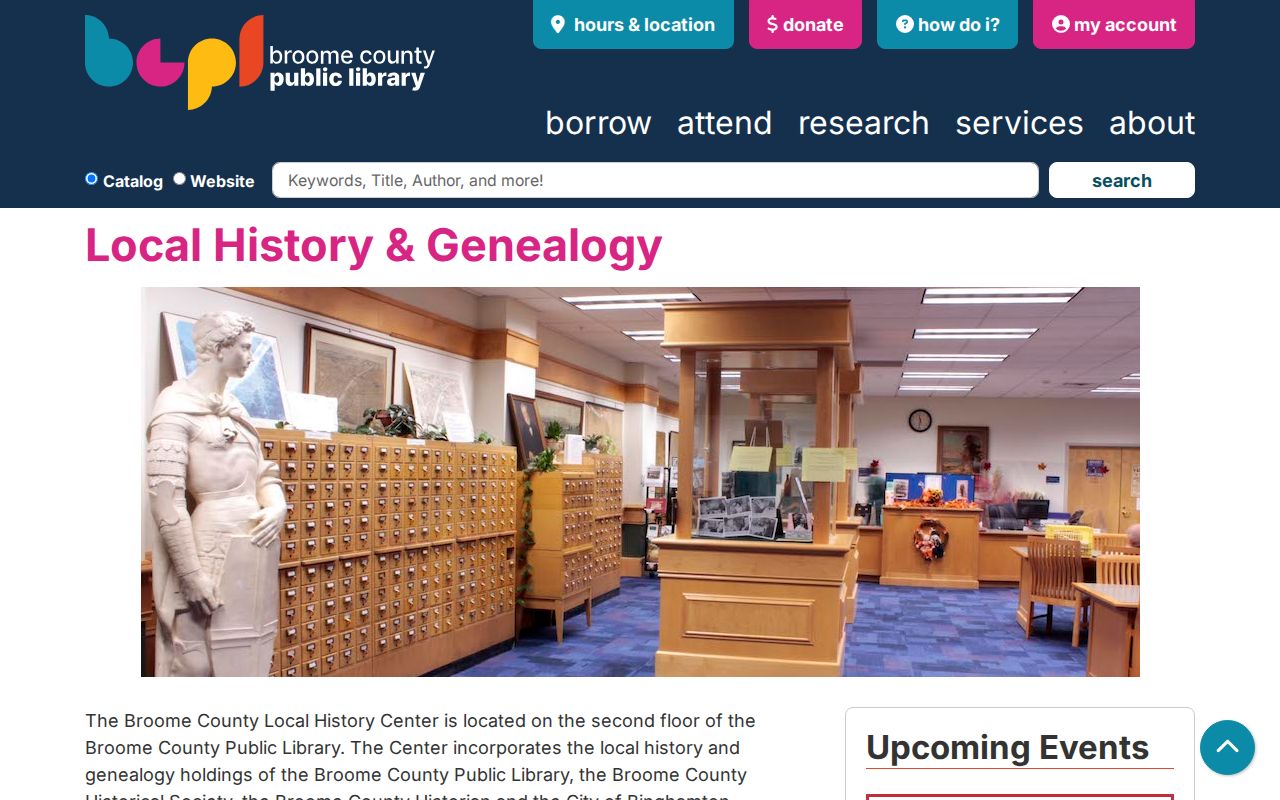
The Center is more than a directory shelf, which makes it useful when a directory name needs confirmation through census, an obituary, a map, or a newspaper issue.
Requesting Vestal Historical Directory Details
Do not assign a publisher, date run, or reverse-directory section to Vestal until a volume or catalog record confirms it. The most useful request is specific: ask BCPL to identify all city, telephone, suburban, and reverse or criss-cross directories covering Vestal or the Binghamton, Endicott, and Johnson City area, with the publisher, volume year, call number, format, and whether a street section exists. Ask separately about yearbooks, Vestal school material, obituary-index scope, and cemetery files. This request is narrow enough to fit the Center’s documented service limits.
Out-of-area researchers may send a written request to the Local History & Genealogy Center, 185 Court Street, Binghamton, NY 13901, or use the listed 607-778-3572 phone and bcpl_localhistory@yahoo.com contact. Staff say they cannot compile family lineages, determine parentage, locate missing people, conduct extensive copying, or research deeds and probate material held elsewhere. The Town Historian is a second local route for Vestal-specific material. Note: Retain the reply, call number, volume year, and format with the first directory citation.
Reading a Vestal City Directory
No actual Vestal city-directory entry from an official digitized collection was inspected, so no publisher’s marks or abbreviation system should be assumed. Once BCPL identifies a volume, retain the printed name, address, and the volume’s own key exactly as shown. A directory entry is a dated clue, not a complete claim about a person or household. Its value increases when the source year, publisher, page, spelling, and any visible marks are saved beside it.
| Printed name | Record surname and given name as printed, including spelling variations. |
|---|---|
| Spouse notation | Preserve any spouse notation only if the identified volume actually prints one. |
| Occupation or employer | Copy the entry’s wording rather than expanding it into a conclusion. |
| Street and house number | Keep the address exactly as printed and compare it with a map or parcel reference. |
| Owner or renter mark | Retain a mark only after consulting that volume’s abbreviation key. |
| Source citation | Save volume year, publisher, page, and the library call number or stable catalog reference. |
- Criss-cross directory
- An address-order volume that may list entries by street; BCPL must confirm local availability.
- Householder index
- An index organized around the listed household name rather than a modern resident roster.
- Abbreviation key
- The volume’s own explanation of marks and shortened terms. Photograph or transcribe it before interpreting an entry.
Do not fill a missing field from a different volume. The missing detail may reflect the publisher’s practice, a change in the household, or a cataloging gap. The original entry and its key remain the authority for how that one volume reads.
Tracing Vestal Households Across Directories
A directory volume becomes more useful when it is read in sequence and paired with another dated record. Begin with one exact name or address in an identified volume. Move through nearby volume years, preserving spelling, spouse notation, address changes, and the page citation. If BCPL confirms a reverse or criss-cross volume, use it to test the address in street order. Then compare nearby directory years with the local census holdings, deeds or assessment material, and obituary evidence. A matching name alone does not settle identity.
- Choose a known name or address and an exact city-directory year supplied by BCPL.
- Copy the printed entry and its source details, including any abbreviation key needed to read it.
- Check adjacent directory years for spelling, spouse, and address changes.
- Use a confirmed reverse or criss-cross section to test the address, not to assume every entry is a current resident.
- Pair the directory years with census microfilm, recorded land documents, and an obituary or newspaper source where relevant.
A disappearance from a volume may reflect a move, death, changed listing practice, or no listing at all. The local obituary file and newspaper microfilm can help frame the next question, but each item should be checked against its own date and source. Note: Record a conclusion only after the dated sources agree on the same person or address.
Vestal Newspaper and Obituary Trails
BCPL’s newspaper microfilm inventory supplies documented Broome-area runs that can fill gaps between a historical directory volume and a census. Examples include the Binghamton Democrat from 1846–1903, Binghamton Daily Republican from 1850–1915 with specified gaps, Binghamton Daily Leader from 1878–1905, Binghamton Evening Herald from 1889–1911, and Binghamton Press from 1904–1964. Search a date or issue locally and treat a social notice, sale notice, marriage notice, or obituary as a lead to the next primary record.
For an out-of-area obituary request, give the name and a date of death or burial date, plus a self-addressed stamped envelope. If an obituary is in BCPL’s files, copying and mailing costs $2. If it is not found or predates 1960, the Center can search microfilm at $10 per hour plus 25 cents per photocopy, with fees paid before work and no fax or email return of obituaries. This is a documented access path, not a promise that a particular notice exists. The BCPL microfilm inventory identifies the available title and date runs.
Vestal Directory Map Context
Historic maps provide a second kind of evidence beside a dated directory volume. The 1876 Atlas and 1908 Plat Book identify lot and landowner context, while the 18 Town of Vestal tax-map sheets help relate an older reference to parcel geography. They do not establish that every name connected with a lot lived there. Use the map label as a place and land-interest lead, then compare it with the directory volume, census enumeration, recorded document, or obituary evidence that speaks to a household.
Broome GIS Map Library lists the 97-page atlas and 95-page plat book used for Vestal historical map context.
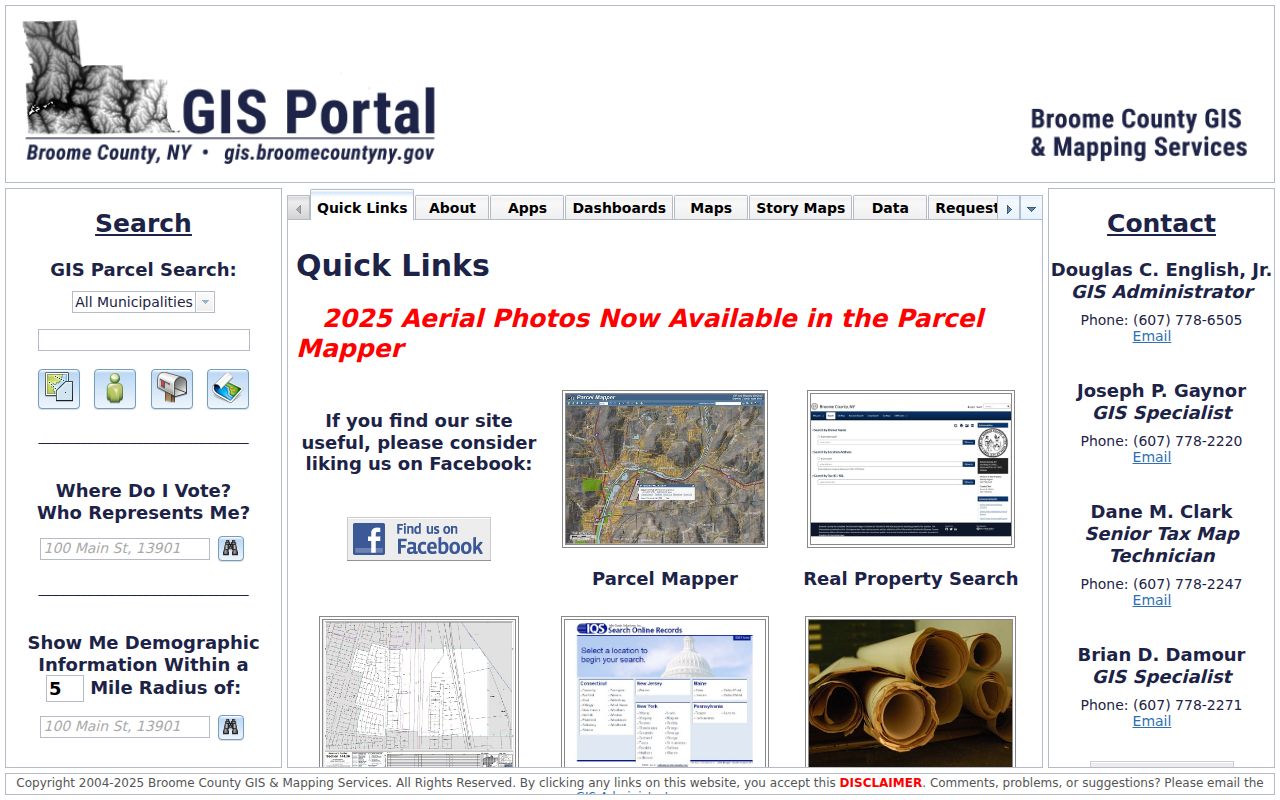
The historic-map listings are a useful comparison layer: map ownership, recorded property interest, and household presence each come from different records and should not be merged without support.
Vestal Names at the Town Historian
The Town Historian and Vestal Museum offer locally focused context when a historical directory uses a hamlet, rural-route, road, or landmark name that no longer looks familiar. Documented Historian material includes the 2024 Welcome to Vestal reference work, a 190th-anniversary series, and articles about ethnic groups, libraries, education, business and industry, and transportation. The historical-marker project supplies dated landmarks that can guide a search of maps, deeds, census film, and newspaper microfilm without turning a landmark into a claim about a particular household.
The Vestal Historian resource links the local-history material and landmark leads.
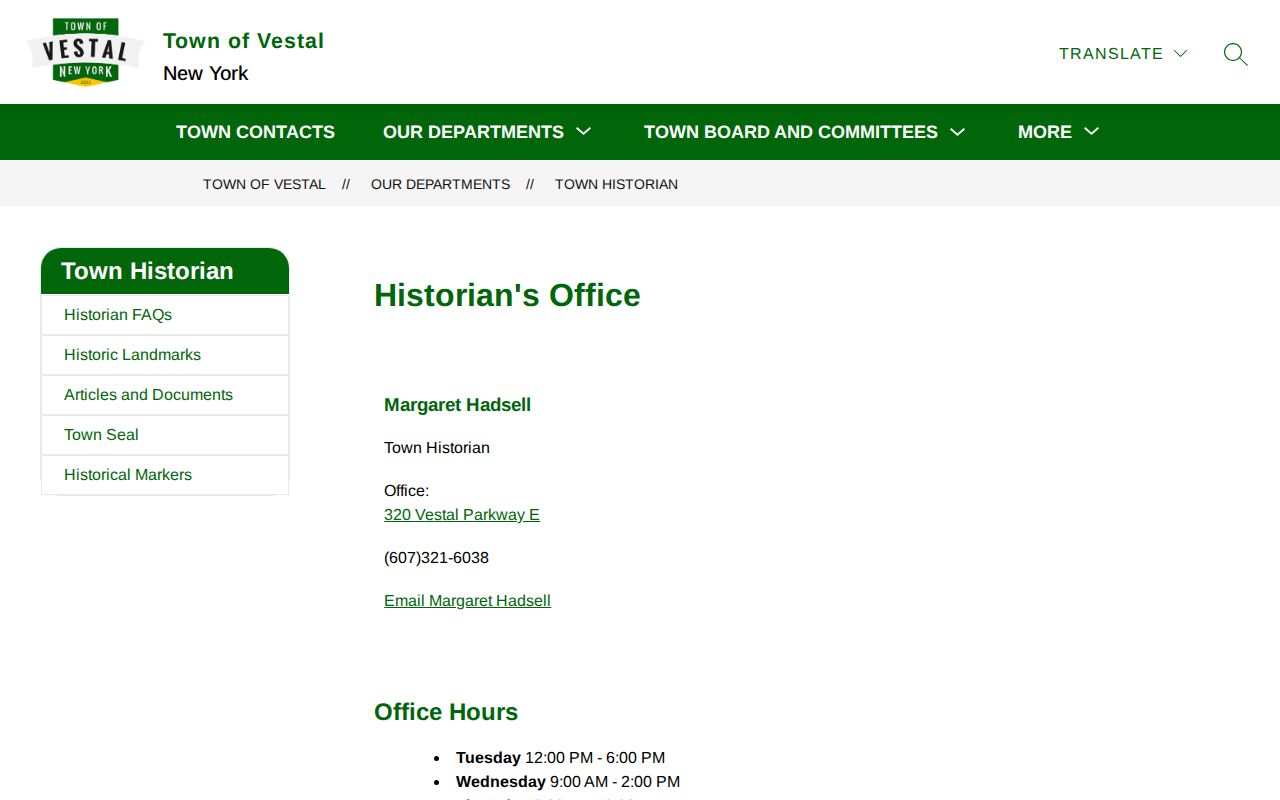
The Historian’s material helps reconcile place names and local chronology before a directory finding is compared with a census or property record.
Vestal Records Through Changing Addresses
Vestal’s record trail has clear shifts in both format and access. The Broome County Clerk’s holdings reach back to 1806, but published online land records begin in 1935. County GIS makes the 1876 Atlas and 1908 Plat Book available as historical map snapshots, while BCPL lists census microfilm holdings through 1930. These dates make a useful research timeline without claiming a directory run that has not been verified. Different sources answer different questions about land, household, address, and death.
- 1806: Broome County Clerk holdings begin for the listed public-document record groups.
- 1876: The digitized atlas supplies landowner and geographic context.
- 1908: The plat book adds another mapped parcel snapshot.
- 1810–1930: BCPL lists federal and New York state census holdings for Broome research.
- 1935 onward: The Clerk’s published online land-record coverage begins; earlier work shifts to the counter and index books.
The Town’s historic markers add address-language context: the Vestal Depot was built in 1881, moved in 1972, and restored as a museum in 1976, while Vestal Parkway construction began in 1941 and was completed in 1951. Those changes can explain differing road or landmark language in a historic entry. They do not prove that two matching names refer to the same household.